Showing posts with label research request. Show all posts

Thursday, June 4, 2020

Group Work with African American Children and Adolescents (part 2 of 3)

Volume 45, Issue 2 of the Journal for Specialists in Group Work (JSGW), the journal of the Association for Specialists in Group Work (a division of the American Counseling Association) is now available online at https://www.tandfonline.com/toc/usgw20/current

This is a special issue on Group Work with African American Children and Adolescents (part 2 of 3), which was co-edited by Sam Steen and Erik Hines.

Please feel free the peruse the journal and consider submitting your own group-focused work for the future!

Volume 45, Issue 2

Editorial


Erik M. Hines & Sam Steen
 
Original Articles


Tuesday, November 19, 2019

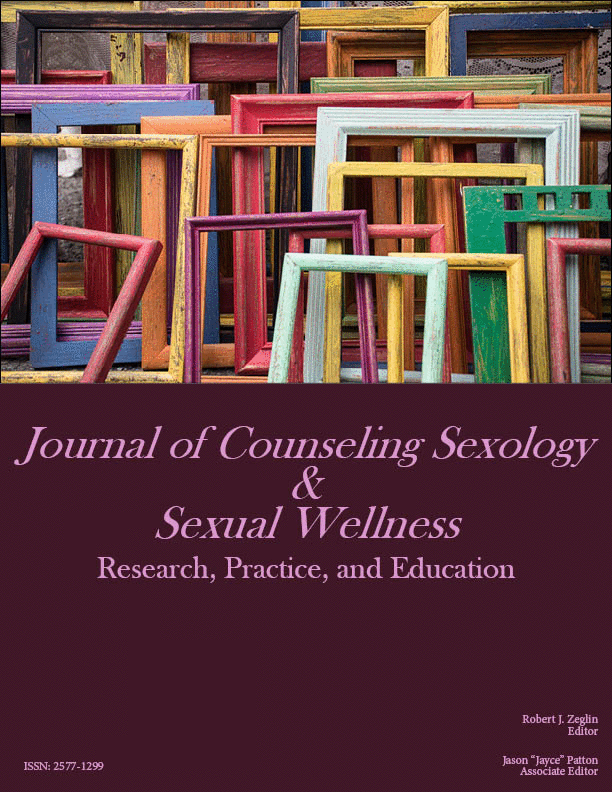
Journal of Counseling Sexology & Sexual Wellness: Research, Practice, and Education (ISSN: 2577-1299)

The Fall 2019 Issue of the Journal of Counseling Sexology & Sexual Wellness: Research, Practice, and Education (ISSN: 2577-1299) is now available! You can access all of the articles at https://digitalcommons.unf.edu/jcssw/. New submissions for the Fall 2020 issue are due March 15th.

Aims & Scope: The Journal of Counseling Sexology & Sexual Wellness: Research, Practice, and Education is a national peer-reviewed journal seeking to promote sexual wellness in the clients and communities counselors serve through a positive approach to sexuality and sexual rights. The journal publishes empirical research using rigorous quantitative and qualitative methods, best practices, descriptive and critical theory analyses, case studies, and current trends and issues focused on sexual wellness at all stages of life. Manuscripts should be of interest to professional counselors including clinical mental health, school, rehabilitation, and addictions counselors as well as to other helping professionals who work in a variety of mental and sexual health settings.

Wednesday, September 11, 2019

Graduate Student Poster Sessions at FSCA 2019


FSCA is accepting proposals for Graduate Student Poster Sessions. Posters will be presented on Nov. 7. Complete your submission here by Sept. 31 to be considered. 
https://www.fla-schoolcounselor.org/2019-convention/

Friday, May 31, 2019

Invitation to Participate in a Study

Drs. Rebecca Milner and Emily Donald of the Department of Counseling and Human Services at East Tennessee State University in Johnson City, TN are seeking participants for their research study titled "Experiences of those who send and receive unsolicited nude photos." To be eligible, participants must have either sent or received an unsolicited nude photo and be 18 or older. Participants who complete a 60-90 minute interview will receive a $20 Amazon gift card. 


Contact Emily Donald at donalde@etsu.edu for more information.

Tuesday, April 30, 2019

Journal of Counseling Sexology & Sexual Wellness: Research, Practice, and Education

The Journal of Counseling Sexology & Sexual Wellness: Research, Practice, and Education (ISSN: 2577-1299) has published its first issue! JCSSW is the official journal of the Association of Counseling Sexology & Sexual Wellness (www.counselingsexology.com). The inaugural issue is available at https://digitalcommons.unf.edu/jcssw/ and is open access. We are still accepting submissions for the Fall 2019 issue, the deadline to ensure that your submission is considered for that issue is May 15. All submissions undergo double-blind peer-review by at least two members of the Editorial Board. The Aims and Scope of JCSSW are available at https://digitalcommons.unf.edu/jcssw/aimsandscope.html.

The Journal of Counseling Sexology & Sexual Wellness: Research, Practice, and Education is a national peer-reviewed journal seeking to promote sexual wellness in the clients and communities counselors serve through a positive approach to sexuality and sexual rights. The journal publishes empirical research using rigorous quantitative and qualitative methods, best practices, descriptive and critical theory analyses, case studies, and current trends and issues focused on sexual wellness at all stages of life. Manuscripts should be of interest to professional counselors including clinical mental health, school, rehabilitation, and addictions counselors as well as to other helping professionals who work in a variety of mental and sexual health settings.

Wednesday, April 24, 2019

FSCA Convention Call for Proposals — Deadline June 3


Proposals are now being accepted for 75-minute breakout sessions. FSCA is seeking proposals promoting evidence-based programs that highlight the latest techniques and practices in school counseling to improve students' academic, college and career readiness, and social-emotional development for the 2019 FSCA Convention. Proposals must be received by midnight on June 3. Submit your proposal here.

Wednesday, April 17, 2019

New Report on Crime and Safety in Schools and College Campuses

Institute of Education Sciences - NewsflashFind IES Research on FacebookConnect with IES Research on Twitter
IES Newsflash

New Report on Crime and Safety in Schools and College Campuses

2019047Crime in the nation’s schools and college campuses has declined overall during the past two decades, according to a report released today (April 17, 2019). The report also highlights new data on youth opioid use, perceptions of bullying, and active shooter incidents in educational settings.
The new report, Indicators of School Crime and Safety 2018, is the 21st in a series of annual publications produced jointly by the National Center for Education Statistics, in the U.S. Department of Education’s Institute of Education Sciences, and the Bureau of Justice Statistics in the U.S. Department of Justice. The report presents statistics on crime and safety at schools and on college campuses. It covers topics such as victimization, school conditions, school environment, safety and security measures at school, and criminal incidents at postsecondary institutions.
The report shows that the percentage of 8th-graders who reported using heroin during the past 12 months decreased from 1.4 percent in 1995 to 0.3 percent in 2017. The percentage also decreased from 1.1 to 0.2 percent for 10th-graders and from 1.1 to 0.4 percent for 12th-graders during the same period.
The new report also shows that from 2000 to 2017, there were 37 active shooter incidents at elementary and secondary schools and 15 active shooter incidents at postsecondary institutions. Each of the active shooter incidents involved a single shooter. All 37 active shooters at elementary and secondary schools were male. At postsecondary institutions, 13 of the active shooters were male, and the other 2 were female.
Other key findings include:
Crime and Security Measures
  • In 2017, students ages 12–18 experienced 827,000 victimizations (theft and nonfatal violent victimization) at school and 503,800 victimizations away from school;
  • About 99 percent of students ages 12–18 reported that they observed the use of at least one of the selected safety and security measures at their schools in 2017. The three most commonly observed safety and security measures were a written code of student conduct (95 percent), a requirement that visitors sign in and wear visitor badges or stickers (90 percent), and the presence of school staff (other than security guards or assigned police officers) or other adults supervising the hallway (88 percent).
School Environment
  • In 2017, about 20 percent of students ages 12–18 reported being bullied at school during the school year. A declining trend between 2005 and 2017 in the percentage of students who reported being bullied at school was observed for both bullying overall and for most of the student and school characteristics examined.
  • About 6 percent of students ages 12–18 reported being called hate-related words at school during the school year in 2017, representing a decrease from 12 percent in 2001. This percentage also decreased between 2001 and 2017 for male and female students as well as for White, Black, and Hispanic students.
Fights and Weapons
  • The percentage of students in grades 9–12 who reported having been in a physical fight anywhere in the previous 12 months decreased between 2001 and 2017 (from 33 to 24 percent), as did the percentage of students in these grades who reported having been in a physical fight on school property (from 13 to 9 percent).
  • In 2017, about 16 percent of students in grades 9–12 reported that they had carried a weapon anywhere at least 1 day during the previous 30 days and 4 percent reported carrying a weapon on school property at least 1 day during the previous 30 days.  
Postsecondary Institutions
  • The number of on-campus crimes reported in 2016 was lower than the number reported in 2001 for every category except forcible sex offenses and negligent manslaughter offenses, The number of reported forcible sex crimes on campus increased from 2,200 in 2001 to 8,900 in 2016 (a 305 percent increase).
  • Race, religion, and sexual orientation were the categories of motivating bias most frequently associated with the 1,070 hate crimes reported on college campuses in 2016.
To view the full report, please visit http://nces.ed.gov/pubsearch/pubsinfo.asp?pubid=2019047
The Institute of Education Sciences, a part of the U.S. Department of Education, is the nation's leading source for rigorous, independent education research, evaluation and statistics.
By visiting Newsflash you may also sign up to receive information from IES and its four Centers NCES, NCER, NCEE, & NCSER to stay abreast of all activities within the Institute of Education Sciences (IES).
To obtain hard copy of many IES products as well as hard copy and electronic versions of hundreds of other U.S. Department of Education products please visit http://www.edpubs.org or call 1-877-433-7827 (877-4-EDPUBS).


Wednesday, January 30, 2019

Digest of Education Statistics 2017 provides new and historical data on all aspects of education

2018070The Digest of Education Statistics is a compilation of a wide array of data about education. Compiled by the National Center for Education Statistics (NCES), the Digest is a comprehensive statistical reference for all levels of education, from prekindergarten through graduate school. Data cover a variety of topics, including the number of schools and colleges, teachers, enrollments, and graduates, in addition to educational attainment, finances, and federal funds for education, libraries, and international comparisons. The new and updated statistical tables that are included in the Digest are released on a rolling basis. A complete volume that includes text and graphics is released annually.
NCES released Digest of Education Statistics 2017 today (January 30, 2019). Key findings on the core topics of enrollment and educational attainment include the following:
  • In fall 2017, public schools enrolled 35.6 million elementary students and 15.1 million secondary students, according to projections. Public elementary enrollment is expected to increase 3 percent between 2017 and 2027, and public secondary enrollment is expected to increase 2 percent over the same period;
  • Between 1990 and 2016, the status dropout rate declined from 12.1 percent to 6.1 percent. (The status dropout rate is the percentage of 16- to 24-year-olds who have not completed high school and are not enrolled in school.) During this period, the status dropout rate for Black 16- to 24-year-olds declined from 13.2 percent to 6.2 percent and the rate for Hispanic 16- to 24-year-olds declined from 32.4 to 8.6 percent. In 2016, the status dropout rate for White 16- to 24-year-olds (5.2 percent) was lower than the rate for Hispanic 16- to 24-year-olds, but it was not measurably different from the rate for Black 16- to 24-year-olds;
  • Fall enrollment in degree-granting postsecondary institutions was 12 percent higher in 2016 (19.8 million) than in 2006 (17.8 million). The overall increase between 2006 and 2016 reflects an increase of 18 percent between 2006 and 2010, followed by a decrease of 6 percent between 2010 and 2016;
  • From fall 1976 to fall 2016, the percentage of Hispanic students rose from 4 percent to 18 percent of all U.S. residents enrolled in degree-granting postsecondary institutions, and the percentage of Asian/Pacific Islander students rose from 2 percent to 7 percent. The percentage of Black students increased from 10 percent in 1976 to 14 percent in 2016, but the 2016 percentage reflects a decrease since 2011, when Black students made up 15 percent of all enrolled U.S. residents. The percentage of American Indian/Alaska Native students was higher in 2016 (0.8 percent) than in 1976 (0.7 percent); and
  • Between 2007 and 2017, the percentage of 25- to 29-year-olds who had completed high school rose from 87 percent to 92 percent. During the same period, the percentage with a bachelor’s or higher degree increased from 30 percent to 36 percent.
To view the full report please visit http://nces.ed.gov/pubsearch/pubsinfo.asp?pubid=2018070
The Institute of Education Sciences, a part of the U.S. Department of Education, is the nation's leading source for rigorous, independent education research, evaluation and statistics.

Tuesday, January 15, 2019

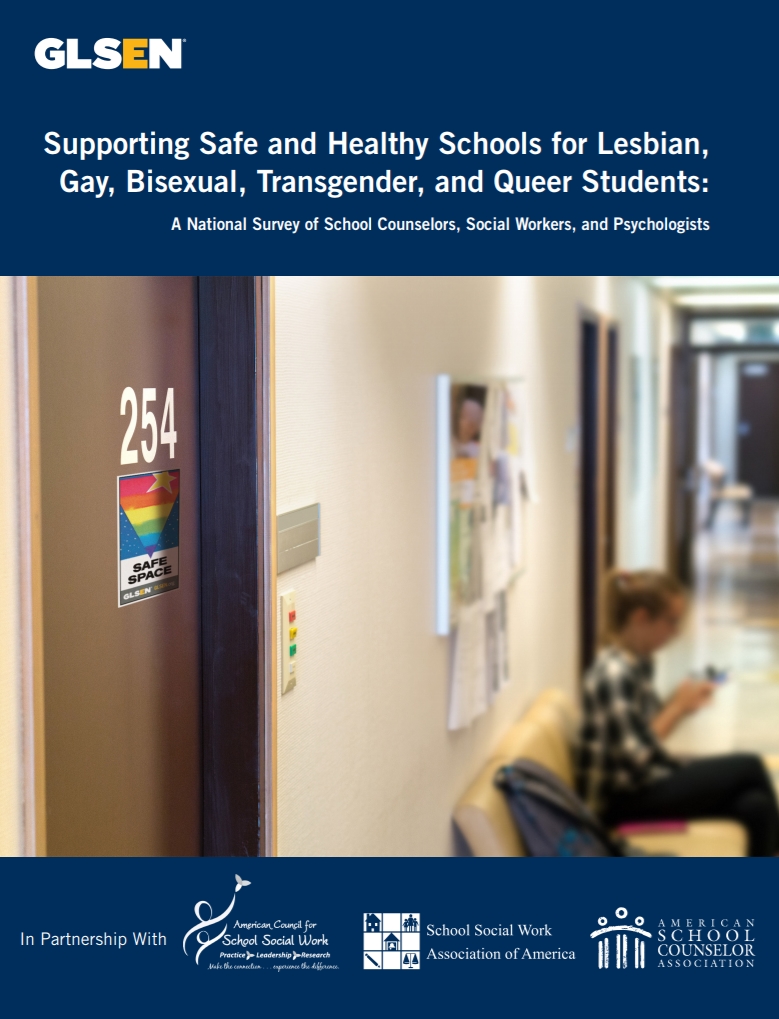
GLSEN in partnership with ASCA, American Council for School Social Work & School Social Work Association of America just released a report detailing how school mental health and counseling providers can help keep LGBTQ students safe and healthy.


Wednesday, December 19, 2018

A Framework for Safe and Successful Schools

The author organizations and cosigners of A Framework for Safe and Successful Schools represent the educators and community partners who work day in and day out to keep our children safe, ensure their well-being, and promote learning. The partnership between our organizations seeks to reinforce the interdisciplinary, collaborative, and cohesive approach that is required to create and sustain genuinely safe, supportive schools that meet the needs of the whole child.


Saturday, November 3, 2018

FGCU breaks ground on Student and Community Counseling Center

Florida Gulf Coast University is expanding access to mental and behavioral healthcare for underserved populations in Southwest Florida. The university officially broke ground Tuesday on its Student and Community Counseling Center.

Read more about this special event from FGCU 360:
https://fgcu360.com/2018/10/31/fgcu-breaks-ground-student-community-counseling-center/

Watch a slide show of the ceremony:

Wednesday, October 17, 2018

Workshop: Dr. Scott D. Miller


Counseling and Psychological Services
 

SAVE THE DATE!
Friday, May 17, 2019
 Counseling and Psychological Services is pleased to present its
11th Annual all-day workshop at
Florida Gulf Coast University in Fort Myers, Florida with

Dr. Scott D. Miller

Scott D. Miller, Ph.D. is the founder of the International Center for Clinical Excellence, an international consortium of clinicians, researchers, and educators dedicated to promoting excellence in behavioral health services. Dr. Miller conducts workshops and training in the United States and abroad, helping hundreds of agencies and organizations, both public and private, to achieve superior results. He is one of a handful of “invited faculty” whose work, thinking, and research is featured at the prestigious “Evolution of Psychotherapy Conference.”
Registration will open later this spring! 
Further dates & details will follow!
Look for our Registration Flyer in your inbox SOON!!!

6 CEUs, continental breakfast, lunch, and afternoon snack included in registration

6 CEUs provided by Florida Gulf Coast University – Counseling & Psychological Services CE Provider# 50-13783.  Florida Board of Clinical Social Work, Marriage and Family Therapy and Mental Health Counseling.


For further information, contact Holly Mathews at hmathews@fgcu.edu  or by phone at 239-590-7950.

Limited number of sponsorship opportunities.
Contact Workshop Director –Wendy Powell at wpowell@fgcu.edu


Thursday, September 20, 2018

Upcoming Webinars from the American School Counselor Association


Join us for the upcoming September/October webinar sessions. Click the links below to learn more and register. Remember, all ASCA webinars are free to ASCA members. If you missed a previously aired webinar, watch it on demand via ASCA On Air.

To view the entire 2018–2019 webinar schedule, visit the ASCA webinar page

Date/Time
Webinar Title
Sept 21, 2018, 3 p.m. Eastern
Sept. 27, 2018, 3 p.m. Eastern
Oct. 3, 2018, 4 p.m. Eastern
Oct. 9, 2018, 2 p.m. Eastern
Oct. 18, 2018, 3 p.m. Eastern
Oct. 24, 2018, 1 p.m. Eastern

Tuesday, August 21, 2018

FMHCA: Call for Student Poster Boards


Announcing Student Poster Board Session

Call for Student Poster Boards

Student Poster Board Session Happening During the FMHCA 2019 Annual Conference: February 1st, 2019


Submissions Must be Made by November 30th, 2018


Address: 2101 Vista Parkway Suite 250, West Palm Beach FL 33415
Phone Number: 561-228-6129

Thursday, July 26, 2018

Cyberpsychology: Journal of Psychosocial Research on Cyberspace


Cyberpsychology: Journal of Psychosocial Research on Cyberspace is a web-based, peer-reviewed scholarly journal. The first peer-reviewed issue was published in September 2007. The journal is focused on social science research about cyberspace. It brings psychosocial reflections of the impact of the Internet on people and society. The journal is interdisciplinary, publishing works written by scholars of psychology, media studies, communication science, sociology, political science, nursing, ICT security, organizational psychology and also other disciplines with relevance to psychosocial aspects of cyberspace. The journal accepts original research articles, as well as theoretical studies and research meta-analyses. Proposals for special issues are also welcomed.

The journal is indexed with Web of Science (Social Science Citation Index and Current Contents - Social & Behavioral Sciences), SCOPUS, ERIH PLUS, EBSCO Academic Search Complete, the Directory of Open Access Journals and the Czech Database of Scientific Journals.

Read the current issue and visit the online archives here.